Border repair
Instead of relying on unsightly patches or quick fixes, our process completely removes the damaged edges and applies a clean, seamless nitrile border, restoring both function and appearance.
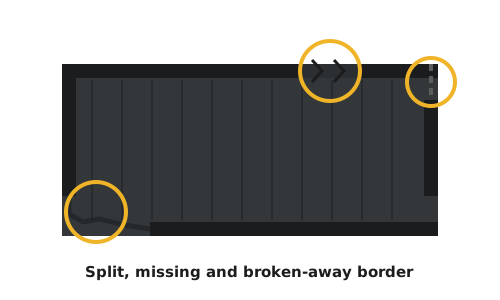
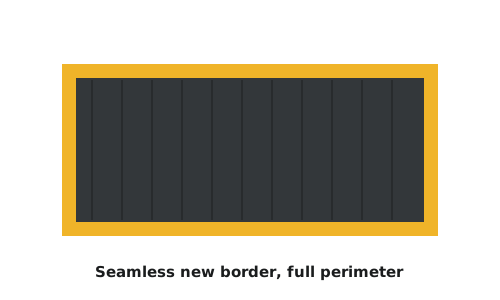

Whether it is a tear, a border flaw, rippling, or a larger mat that can be cut down to a usable size, our remanufacturing process brings damaged mats back to life and returns them to your inventory clean, safe, and ready for the route at a fraction of the cost of replacement.
Instead of relying on unsightly patches or quick fixes, our process completely removes the damaged edges and applies a clean, seamless nitrile border, restoring both function and appearance.
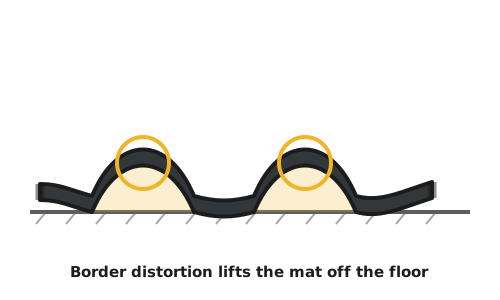
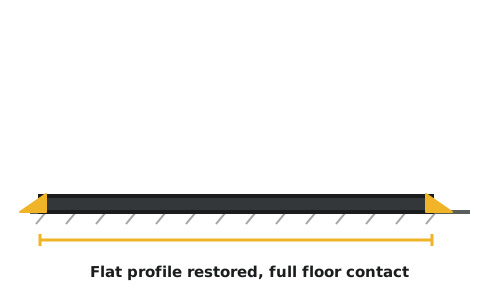
When mats develop ripples, we do not just flatten them. We remove the border to eliminate the distortion, then rebuild it. The mat's flat profile is restored, improving floor contact, appearance, and safety.
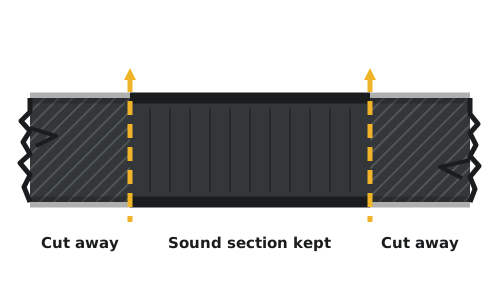
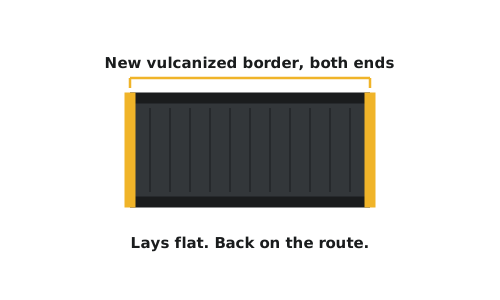
When a mat is damaged at one or both ends, we can often cut it down and create a clean, usable mat from the centre. It is re-bordered and restored to NFSI-certified standards, ready to go back into service instead of into a landfill.
When mats start to show fading or uneven colouring, over-dyeing gives them a clean, refreshed look without the cost of replacement. Mats are dyed solid black, restoring a uniform appearance and extending service life.
Compatible with most mat types. Not suitable for red tones, logo mats, or PET (polyethylene terephthalate) mats. Requires a full load of no less than 800 lbs.
We also offer custom sizing, RFID chip installation, and label reapplication, so your mats come back ready to scan, ready to bill, and built to last. Standard UHF chips. Corner labels with or without a border replacement.
Damaged edges are fully removed and a clean, seamless nitrile border is bonded on. No patches, no glued edges, no quick fixes.
Remanufacturing is compatible with most fabric-topped, nitrile rubber-backed rental mats. These types are not repairable. Leave them off the pallet and it saves both sides a wasted shipment.
We reserve the right to reject mats deemed unsuitable for repair, for example excessive wear, staining, or structural damage.